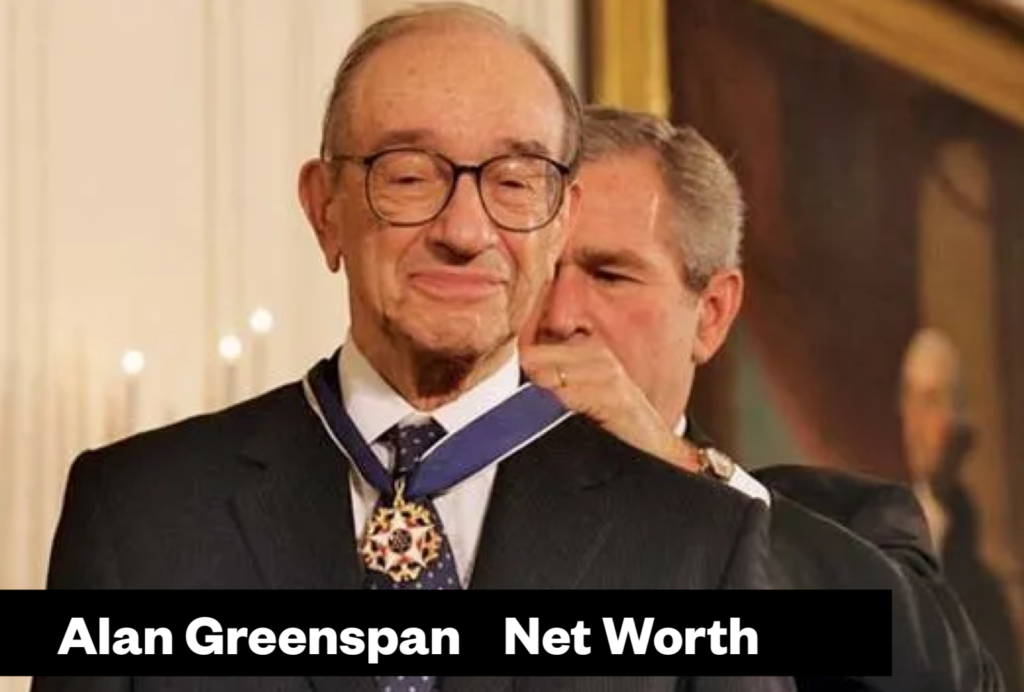
Alan Greenspan has died at 100. Here’s how the former Fed chair built wealth through public service, consulting, books, and economic influence.
Alan Greenspan’s death has renewed public interest in the fortune behind one of America’s most influential central bankers. His wealth story was never about celebrity-style income. It was built around economic authority, post-Fed consulting, paid speaking, publishing, and decades of public influence.
By NetDesk Editor
Why Alan Greenspan’s Net Worth Is Being Searched Now
Alan Greenspan is back in public search interest because of his death at age 100. The longtime former chairman of the Federal Reserve died from complications related to Parkinson’s disease, according to a statement from his wife, journalist Andrea Mitchell. The Guardian reported his death on June 22, 2026, noting both his long influence on U.S. monetary policy and the later debate around his legacy.
That news has made readers look again at his net worth, not because Greenspan was a celebrity billionaire, but because he held one of the most powerful economic positions in the world. For nearly two decades, he led the Federal Reserve through market shocks, recessions, booms, bubbles, and major global events.
His financial life is different from the wealth stories of Wall Street founders or hedge fund managers. Greenspan spent years in public service, where government salaries are limited compared with private finance. His larger wealth came later from consulting, writing, speaking, and the market value of his reputation as a former Fed chair.
Public estimates commonly placed Alan Greenspan’s net worth around $20 million in 2026. That estimate should be treated carefully, because private assets, taxes, investments, and liabilities were not fully public. Still, the figure is believable when viewed alongside his post-Fed consulting business, book income, paid commentary, and long career as an economist.
Quick Facts About Alan Greenspan
| Detail | Information |
|---|---|
| Full Name | Alan Greenspan |
| Profession | Economist, author, consultant, former central banker |
| Date of Birth | March 6, 1926 |
| Date of Death | June 2026 |
| Age at Death | 100 |
| Nationality | American |
| Best Known For | Chairman of the Federal Reserve from 1987 to 2006 |
| Estimated Net Worth | Commonly estimated around $20 million |
| Main Wealth Sources | Consulting, books, speaking, advisory work, investments |
| Spouse | Andrea Mitchell |
| Major Book | The Age of Turbulence: Adventures in a New World |
| Public Legacy | Highly influential but debated Federal Reserve chairman |
The Latest Estimate of Alan Greenspan’s Fortune
Alan Greenspan’s net worth was commonly estimated at around $20 million before his death. The figure was not based on public stock ownership like a billionaire founder’s fortune, and it should not be treated as an exact financial statement. It is better understood as a public estimate shaped by his consulting income, book deals, paid speaking, private advisory work, and long career in economics.
A March 2026 finance profile from TheStreet placed Greenspan’s net worth at $20 million and linked the figure to consulting fees, speaking engagements, and book income. TheStreet also reported that Penguin Press paid him $8.5 million for his 2007 memoir, The Age of Turbulence, one of the clearest public financial signals in his post-Fed career.
That number makes Greenspan wealthy by ordinary standards, but it also shows how different his financial path was from private-sector financiers. He influenced markets, interest rates, banking conditions, mortgages, and global investor psychology, yet his personal wealth was far smaller than the fortunes of hedge fund founders, investment bank executives, or private equity chiefs.
His fortune came from turning economic credibility into private-sector demand after leaving the Fed. In other words, his real asset was not a company or a public stock stake. It was his authority.
How a Fed Chairman Actually Earns Money
A Federal Reserve chair does not earn like a Wall Street CEO. The job is powerful, but it is still a public-sector role. The chair’s compensation is set within government pay structures, and the position is not designed to create personal wealth on the level of private finance.
Greenspan served as chairman of the Board of Governors of the Federal Reserve System from 1987 to 2006. Federal Reserve History says he served five terms and was appointed chairman by four different presidents. That tenure made him one of the longest-serving and most influential central bankers in modern U.S. history.
During his years at the Fed, Greenspan’s power came from policy influence rather than personal earnings. His decisions helped shape interest rates, credit conditions, inflation expectations, and market confidence. But the salary from public office was not the main source of his later wealth.
That distinction matters. Many readers assume a person who controls monetary policy must become extremely rich while in office. In reality, the financial rewards for people like Greenspan often come after government service, when corporations, investors, publishers, and event organizers are willing to pay for access to their expertise.
Greenspan Associates and Post-Fed Consulting Income
Greenspan’s most important wealth-building period came after he left the Federal Reserve. He returned to private advisory work through Greenspan Associates, the consulting firm he had originally built before becoming Fed chair.
This is where his public reputation became financially valuable. A former Fed chair can offer rare perspective on interest rates, inflation, global markets, financial regulation, and economic cycles. Corporations, investors, and institutions may pay substantial fees for that kind of insight.
Greenspan’s consulting business did not need mass-market publicity to be valuable. Its appeal came from exclusivity. Clients were not paying for a television personality. They were paying for the judgment of someone who had spent nearly 19 years inside the most important central bank in the world.
That consulting model explains much of his net worth. Unlike a celebrity who earns from public fame, Greenspan monetized private expertise. His knowledge, network, and reputation were the product.
Book Deals, Speaking Fees, and the Value of Economic Authority
Alan Greenspan also earned from publishing and speaking. His memoir, The Age of Turbulence: Adventures in a New World, became a major part of his post-Fed financial story. Penguin’s listing for the book presents it as Greenspan’s account of global economic change and his years inside policy circles.
The reported $8.5 million advance is important because it shows how valuable his name was after leaving office. Publishers do not pay that kind of money only for a retired official’s memories. They pay because the author has public authority, media demand, and a direct connection to events readers want to understand.
Speaking fees likely added another income stream. Former central bankers are often invited to economic conferences, private events, financial forums, corporate meetings, and university programs. The value is not only in what they say, but in the credibility their presence brings to an event.
Greenspan’s speaking and writing income came from the same source as his consulting income: intellectual capital. He spent decades building expertise, then earned from explaining, interpreting, and packaging that expertise for private and public audiences.
Why His Net Worth Was Smaller Than His Influence
Alan Greenspan’s personal fortune was small compared with his influence over the U.S. economy. That contrast is one of the most interesting parts of his financial story.
A Wall Street executive with a $20 million net worth can be considered successful. A Fed chair with the same estimated wealth looks different because the office itself affects trillions of dollars in financial activity. Greenspan’s decisions could move bond markets, stock prices, mortgage rates, bank lending, and business confidence.
That does not mean he personally profited from those movements. Central bankers operate under public ethics rules and conflict-of-interest limits. The office gives influence, not ownership.
This is why Greenspan’s fortune should be read as the wealth of a senior public intellectual and consultant, not the fortune of a market operator. He did not become rich by owning the assets that moved under his policy decisions. He became wealthy later because his experience became valuable to people who wanted to understand those markets.
The Financial Legacy: Growth, Bubbles, and Criticism
Greenspan’s economic legacy is complex. For much of his Fed tenure, he was praised for helping guide the U.S. economy through strong growth, low inflation, and major financial shocks. He led the Fed through the 1987 stock market crash, the dot-com period, the aftermath of September 11, and other difficult moments.
But his reputation changed after the 2008 financial crisis. Critics argued that his support for financial deregulation and the Fed’s low-rate policies helped create conditions that contributed to the housing bubble and later collapse. The Guardian’s obituary noted that Greenspan later acknowledged he had misjudged the ability of banks and markets to regulate themselves.
That debate matters for a net worth article because reputation can affect post-career earning power. Greenspan remained influential after leaving the Fed, but his legacy became more contested. He was still respected as a historic economic figure, yet no longer viewed with the near-universal admiration he enjoyed during parts of the 1990s and early 2000s.
His financial legacy therefore has two sides. He built wealth from credibility, but that credibility was later examined more critically.
Greenspan’s Wealth Compared With Modern Finance Figures
Alan Greenspan’s estimated $20 million fortune was large by normal standards but modest compared with the wealth of many private-sector financial leaders.
Hedge fund founders, private equity executives, investment bankers, and major asset managers can earn far more because they own firms, receive performance fees, or hold equity in businesses. Greenspan’s career was not built around that structure.
He made money from expertise, not ownership of a financial empire. That puts him closer to a highly paid consultant, author, and former public official than to a billionaire investor.
This comparison helps explain why his net worth may seem surprisingly small to readers who know how much power the Federal Reserve holds. Greenspan influenced markets, but he did not own the markets. His income came from interpreting them.
What Readers Should Understand About His Fortune
Alan Greenspan’s fortune shows the difference between public authority and private wealth.
As Fed chair, he had enormous influence but limited personal earning capacity. After leaving office, that influence became marketable. He could consult, speak, write, and advise because his name carried rare economic weight.
His wealth also shows the value of a reputation built over decades. Greenspan did not become wealthy through a viral business, a startup exit, or a public stock position. He became wealthy because institutions wanted his judgment.
For readers, the lesson is simple: expertise can become an asset. In Greenspan’s case, that asset was built through public service, private consulting, academic economics, and an unmatched seat at the center of U.S. monetary policy.
Conclusion
Alan Greenspan’s net worth was commonly estimated at around $20 million at the time of his death. That fortune was shaped by consulting, speaking, book income, advisory work, and the long-term value of his economic authority.
His death at 100 has renewed attention on both his money and his legacy. Greenspan was not a Wall Street billionaire, but he was one of the most influential financial figures of the modern era. His decisions affected markets around the world, while his post-Fed career turned that influence into private income.
His story is a reminder that not all financial power looks the same. Some wealth comes from owning companies. Some comes from trading markets. Greenspan’s came from something different: being one of the few people whose economic judgment shaped how the world understood money, interest rates, and risk.
FAQs
What was Alan Greenspan’s net worth when he died?
Alan Greenspan’s net worth was commonly estimated at around $20 million when he died. The figure should be treated as a public estimate, not a confirmed private financial statement.
How did Alan Greenspan make his money?
He made money through public service, private consulting, paid speaking, book income, advisory work, and his consulting firm, Greenspan Associates.
How long was Alan Greenspan chairman of the Federal Reserve?
Alan Greenspan served as chairman of the Federal Reserve from 1987 to 2006, covering five terms and four U.S. presidents.
Did Alan Greenspan become rich from the Federal Reserve?
His Fed salary was not the main source of his wealth. His larger financial gains came after leaving public office, especially through consulting, speaking, and publishing.
What was Alan Greenspan’s financial legacy?
His financial legacy is mixed. He was praised for guiding the economy through major events, but later criticized for policies and regulatory views that critics linked to the 2008 financial crisis.